

What Is a Commercial Blender Sound Enclosure, and Does It Actually Work?
Oct 15,2026
3
If you run a fresh juice or bubble tea shop, one of the most common and annoying headaches is the roar of your blender during peak hours. Right after a customer orders a fresh orange juice, the machine fires up. Its buzzing and pounding noise drown out your store music instantly, forcing patrons at nearby tables to shout to hold a conversation. Many shop owners wonder: will adding a sound enclosure around the blender fix this problem? The answer is — yes, but only if you pick the right one, install it correctly, and use it properly.
Why Are Commercial Blenders So Loud?
First, let’s understand where the noise comes from. Commercial blenders need to crush ice, hard fruits, and tough fibers. Their motors typically run from 1,600 to 2,200 watts or higher, with speeds exceeding 25,000 RPM. That high power and rapid rotation create heavy vibration during operation, pushing noise levels to 80–90 decibels. This far surpasses the 55-decibel daytime noise limit for residential areas in environmental sound regulations, and it is well above the volume range for comfortable conversation. There are three main sources of noise: high-pitched whining from the motor itself, mechanical clatter as blades cut and strike ingredients, and low-frequency vibration amplified by the blender body. Low-frequency noise is the hardest to mitigate; it travels through walls and countertops, so simply moving the blender usually won’t help much.
How Does a Sound Enclosure Reduce Noise?
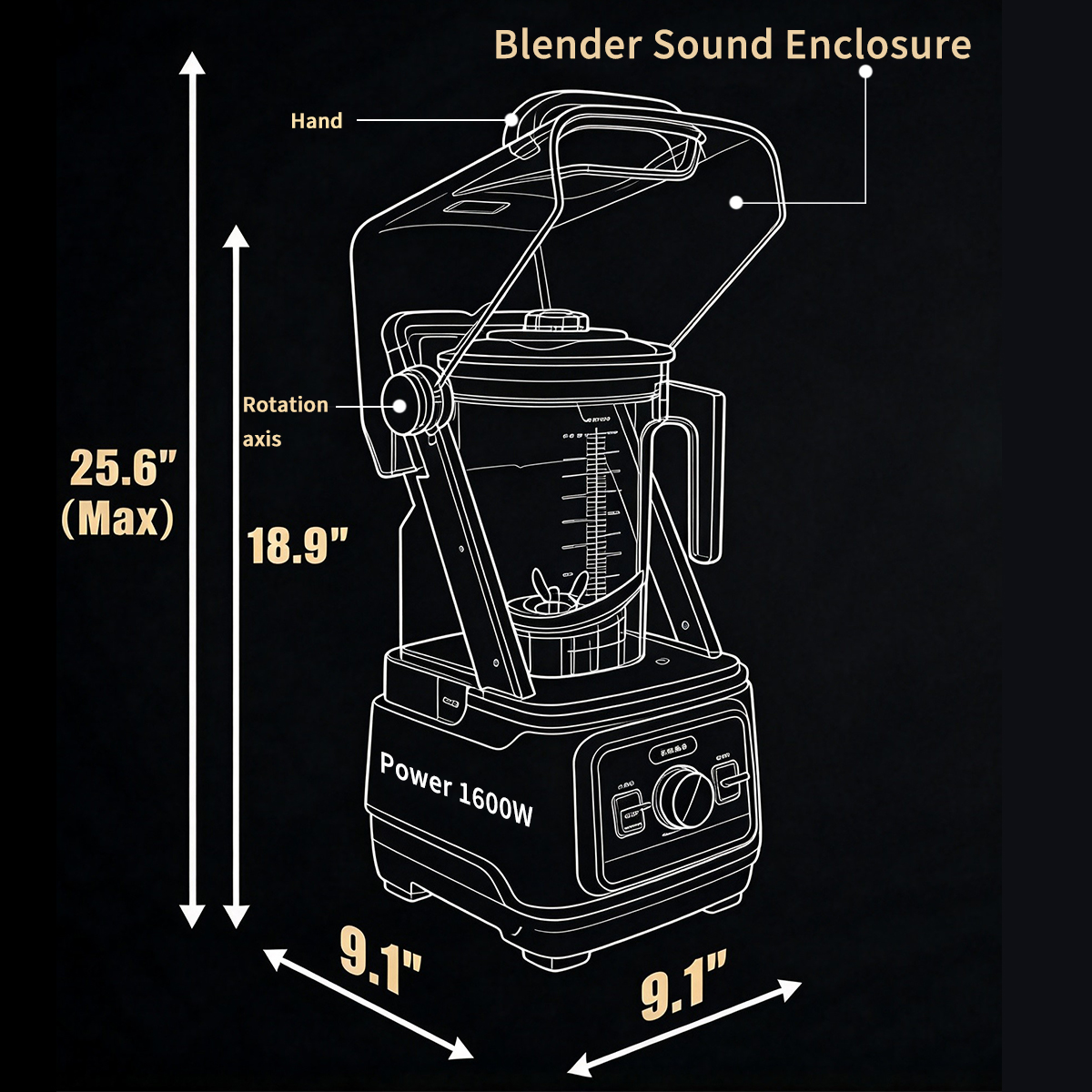
A sound enclosure works on two core principles: blocking sound and absorbing it. A quality multi-layer assembly normally has three sections. The outer steel or high-density shell stops sound from escaping outward. A middle layer of sound-absorbing foam absorbs mid-to-high frequency motor whine and cutting noise. Inner acoustic panels reduce sound bouncing repeatedly inside the enclosure. Professional manufacturers’ data shows a well-designed sound enclosure can cut the blender’s noise output by 25 to 30 decibels. Standard commercial blender quiet covers generally reduce noise by roughly 20 decibels, or lower sound intensity by 20% to 50%. In other words, a deafening 90-decibel roar can drop to 70 decibels or less, turning a disruptive racket into something tolerable.
The concept is straightforward: sound is energy. Trap that energy inside a sealed, sound-absorbing chamber, and far less noise escapes to the outside.
Not Every “Quiet Cover” Is a True Sound Enclosure
Many so-called quiet covers sold on the market are just gimmicks. Cheap thin, poorly sealed covers only keep dust and splashes contained; they barely reduce sound at all. Noise reduction depends on mass and airtight sealing, not just a thin plastic shell. A genuinely effective commercial sound enclosure has to meet several critical requirements:
First, multi-layer composite construction. Steel or heavy-duty outer shells block low-frequency noise, while acoustic foam absorbs mid and high frequencies. Missing any layer drastically cuts performance. Second, airtight construction. Gaps between the enclosure and blender base, wiring openings, and button cutouts let sound leak out just like light through a cracked door. Proper sealing preserves noise reduction. Third, correct sizing. An enclosure that is too small will press against the blender and hinder operation. One that is oversized delivers almost no benefit. Always measure your blender’s height and width before purchasing.
Another frequently overlooked factor is heat dissipation. High-wattage motors generate substantial heat during continuous use. While the enclosure traps noise, it can also trap heat inside. Choose a model with well-designed ventilation and cooling features. Without adequate airflow, the blender overheats and its service life shortens — a tradeoff that is not worth it.
How to Get Your Money’s Worth
If your juice shop sits near residential buildings or office towers, or you need to maintain a pleasant acoustic environment inside your store, a commercial sound enclosure is a worthwhile investment. It is especially ideal for shops using blenders frequently and worried about noise complaints. When shopping, select units with multi-layer construction, reliable sealing, and proper cooling. Do not get misled by marketing that only advertises “quiet operation.” Pair the enclosure with good operating habits: blend during off-peak times when possible, and place the blender on thick padding to cut vibration transfer for better results.
VONCI’s takeaway: Sound enclosures are not a perfect fix, but they are currently the lowest-cost, fastest-acting noise reduction solution. Fit your blender with a quality enclosure, and most of the loud noise will be suppressed. Customers enjoy a calmer space, and shop owners receive fewer complaints. This purchase pays off.