

How to Choose a Commercial Coffee Machine? Five Core Dimensions to Avoid Pitfalls
Aug 10,2026
239
Commercial coffee machines are essential equipment for coffee shops, hotels, tea beverage stores, office buildings and catering venues. To select a durable, cost-effective model that fits commercial scenarios, you should take five core dimensions into account — product quality, user experience, cost performance, compliance certification and after-sales service — to comprehensively mitigate potential risks.
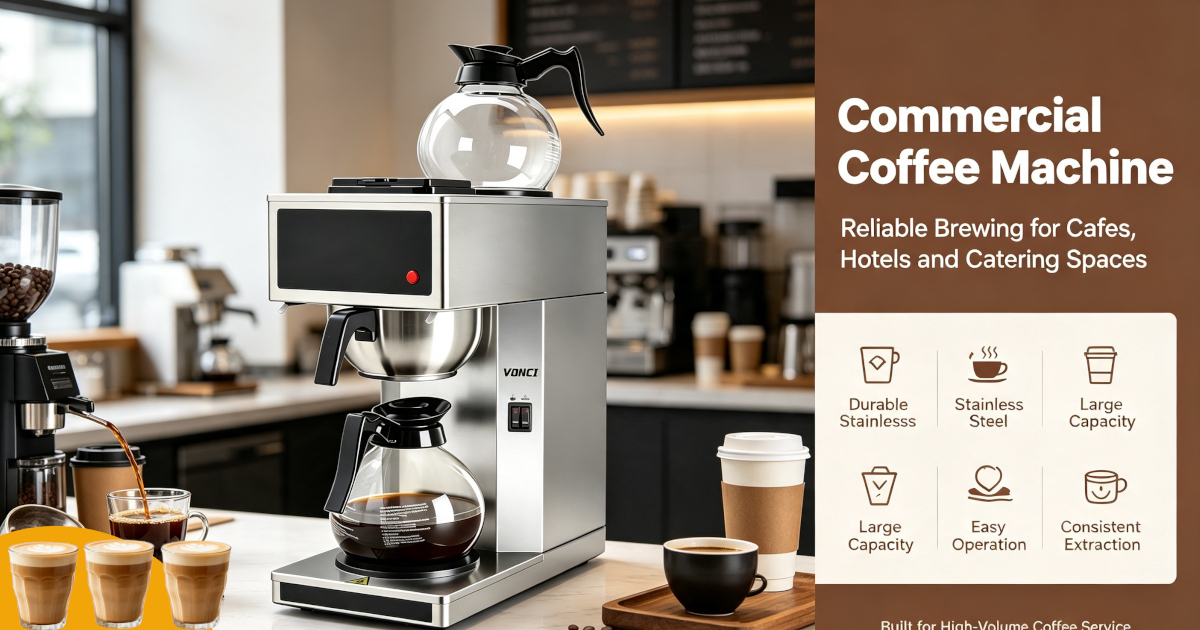
As is known to many, store operators often only focus on appearance and basic functions when purchasing coffee machines, while overlooking critical details. This eventually leads to problems such as frequent breakdowns, complicated operation, excessive energy consumption, lack of compliance qualifications and unreliable after-sales support, causing unnecessary financial losses.
First, prioritize the core quality of the equipment to lay a solid foundation for long-term commercial operation. The most significant difference between commercial and household appliances is that commercial models are designed for high-frequency, long-hour and uninterrupted use. For this reason, body material, core components and manufacturing craftsmanship are the top evaluation criteria.
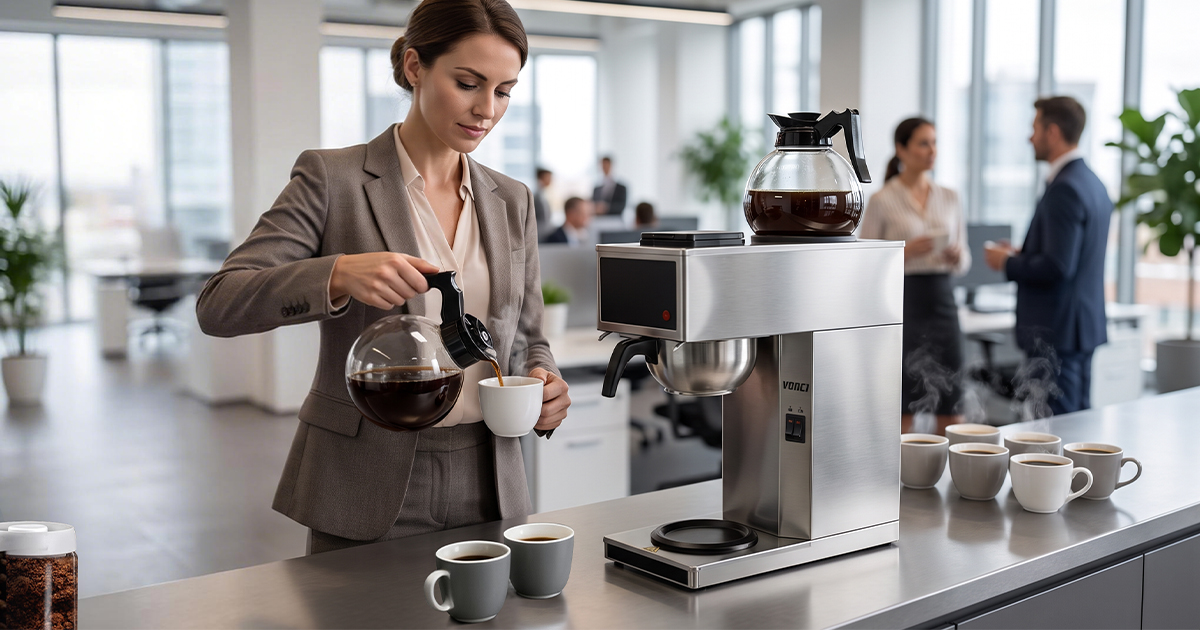
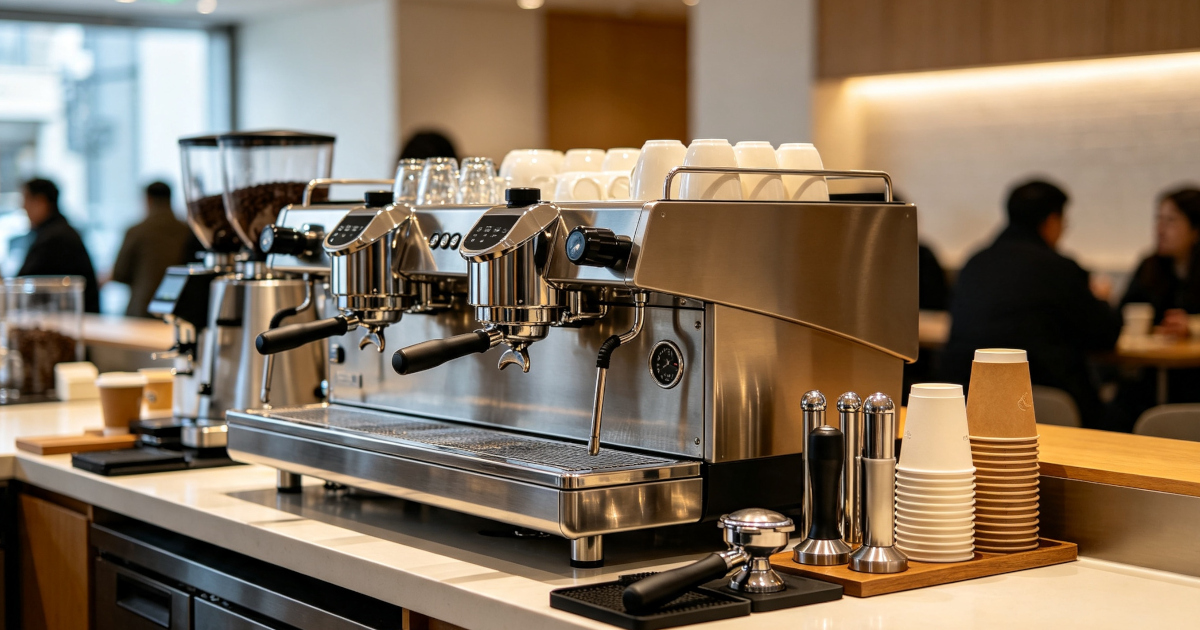
High-quality commercial coffee machines generally use food-grade 304 stainless steel for the machine body and internal pipelines, featuring rust resistance, corrosion resistance, high temperature tolerance and leak-proof performance. They can withstand intensive continuous operation in stores, and are not prone to deformation or bacterial growth after long-term use. Meanwhile, core components including boilers, water pumps and extraction mechanisms deserve close attention. Premium models are fitted with a stable dual-boiler system and precise temperature control modules, ensuring constant water temperature and pressure, as well as consistent extraction strength and flavor for every single cup. When purchasing, stay away from low-end models with excessive plastic parts and shoddily made extraction mechanisms. Such devices are prone to water leakage, liquid output failure, uneven extraction and frequent shutdowns even after short-term use, which will severely disrupt normal store operations. Solid hardware quality is the core guarantee for long-term stable equipment operation and reduced operating losses.
Second, prioritize excellent user experience to support efficient store operation. The user experience of a coffee machine is mainly reflected in operational convenience, cleaning difficulty, operating noise and scenario adaptability, which directly affects staff efficiency and service quality. Professional commercial models are equipped with intelligent touch panels and one-touch preset brewing programs. They do not require operation by professional baristas — even novice staff can master them quickly, which greatly cuts labor training costs. In addition, they support automatic cleaning and one-touch descaling functions, simplifying daily maintenance and saving plenty of cleaning time. High-quality machines also feature low operating noise, precise temperature control and fast brewing speed, which can handle large order volumes during peak hours and avoid long queues. You should choose a model based on your actual operation scenario: compact fully automatic models are suitable for small stores, while multi-group head high-capacity machines fit stores in large business districts and hotels. Choosing the right model will best improve user experience and store efficiency.
Third, keep a rational attitude toward pricing and reject blindly low prices as well as excessive premiums. The coffee machine market has an extremely wide price range, with a huge gap between entry-level basic models and high-end commercial machines. When making a purchase, never go for the lowest price alone, nor blindly pursue top-tier high-priced configurations. Low-priced inferior machines may seem to save initial costs, but they have high failure rates, high energy consumption and fast wear. Their later maintenance and replacement costs will far exceed the original price of the equipment. On the other hand, overpriced high-end models come with many redundant functions that small stores cannot fully utilize, resulting in resource waste. We always adhere to the principle of "demand-based matching with cost performance first", and select suitable models based on the store's daily cup output, operation scale and functional requirements. It is recommended to choose equipment directly supplied by original manufacturers, which eliminates the markup from middlemen. Within a reasonable budget, you can balance hardware quality, practical functions and energy efficiency to achieve a balance between cost and benefit.
Fourth, verify complete compliance certifications to ensure worry-free compliant operation. Compliance certification is a mandatory standard for the legal use and safe operation of commercial equipment, and also a core threshold for export and chain store procurement. Coffee machines from formal brands must have complete qualifications including safety certification, food contact safety certification and energy efficiency certification. Export models also need internationally authoritative certifications such as CE and UL to meet the market access standards of Europe, America, Southeast Asia, the Middle East and other regions.
Complete certifications prove that the equipment has safe materials, stable circuits and up-to-standard energy consumption with no hidden safety risks, and can smoothly pass store quality inspections, fire safety checks and export customs reviews. Uncertified unbranded equipment not only poses risks of electric leakage, water leakage and food safety issues, but may also lead to business suspension for rectification and failure in export customs clearance, which seriously impacts operations. Therefore, be sure to check the full set of qualification documents when importing equipment.
Improve after-sales service to eliminate worries about long-term operation. Coffee machines are precision electromechanical equipment — even in high-end coffee shops, wear and tear is inevitable after long-term high-frequency use, making a sound after-sales system a vital guarantee for stable operation. When purchasing, focus on the brand's warranty period, maintenance response speed, spare parts supply capacity and technical support services. Reliable suppliers provide one-stop services including long-term full-machine warranty, free technical guidance, remote debugging and prompt on-site maintenance. They also keep original factory spare parts in stock to resolve equipment failures quickly and minimize downtime.
If customization is needed, VONCI provides value-added services such as technical guidance, installation and commissioning to fully accommodate users' batch procurement needs. For equipment without after-sales support, once a malfunction occurs, you have to pay for repairs and part replacements out of pocket. This is not only costly, but also causes severe delays to normal store operations.
To sum up, the selection of commercial coffee machines requires comprehensive consideration of five dimensions: quality, user experience, cost performance, certification and after-sales service. Various factors such as later maintenance and service life are also of vital importance and should be fully evaluated.